
Anki
Manabi: A Comprehensive Japanese i+1 Core Anki Deck
A frequency-sorted Japanese i+1 core Anki deck with 2.7k words and sentences, featuring full audio, furigana, and natural example sentences.
- Anki
- #deck
- #grammar
- #vocabulary
Shared by 天 Staff
Published ·Updated
Details
Manabi 2.7k highlights
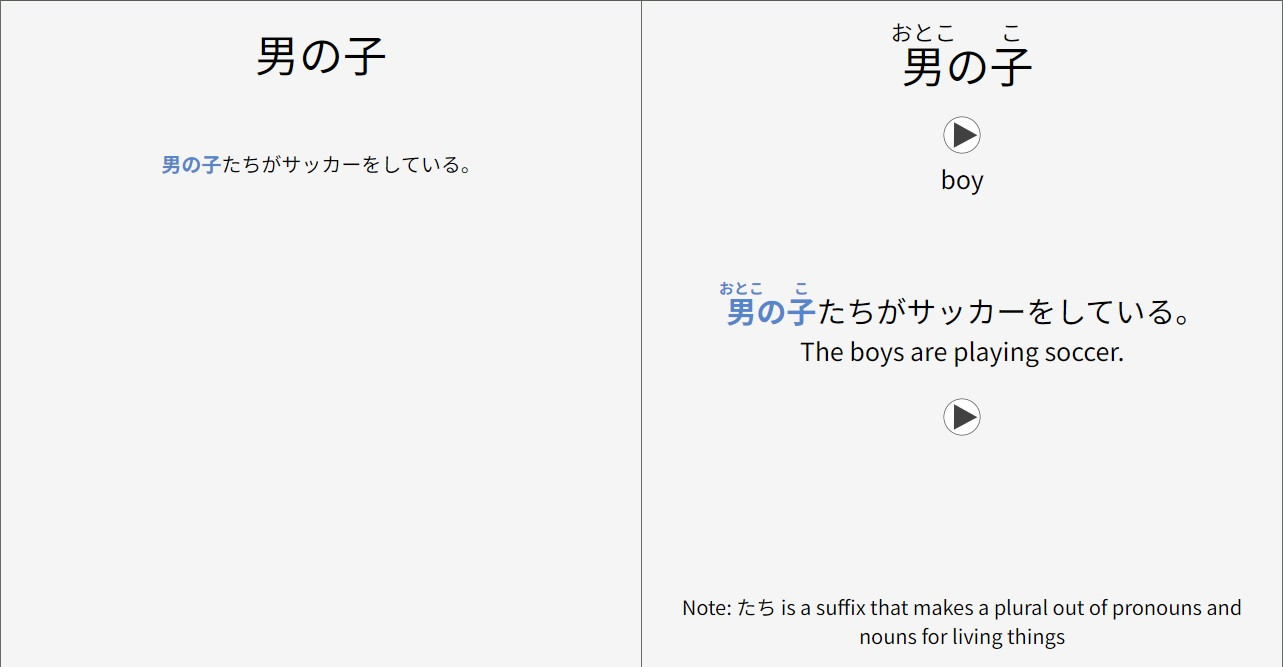
Manabi is a new Japanese i+1 core Anki deck, which aims to expand and improve upon other existing core decks for beginner learners of Japanese. Manabi makes use of a much wider variety of example sentences, all with audio and furigana, newly re-ordered, that use natural and colloquial language.
- Introduces vocabulary following i+1 – All example sentences introduce only one new word per card, with very few exceptions.
- Gradually introduces kanji, one at a time – Starts with simple kanji and gradually introduces words with more complicated kanji, following i+1 for new kanjis.
- Rich selection of vocabulary – Words drawn from multiple types of content: Netflix subtitles, easy Japanese YouTube channels, slice-of-life anime, and more.
- Exhaustive coverage – Includes over 2,700 words and 1,300 kanji, covering 80%–90% of all the words and kanji most commonly used in everyday life and popular media, sorted by frequency.
- Natural example sentences – All with full audio and furigana, including common idiomatic expressions and non-textbook grammar.
- Beginner-friendly grammar – Most sentences use only N5–N4 grammar, with added explanatory grammar notes.
Additional features include normalized audio loudness, specifically marked common する verbs and な adjectives, and all new vocabulary highlighted inside the sentences.
How to use this deck
For people who finished Kaishi 1.5k, there is a special tag Kaishi_word that allows you to select all words in Kaishi and suspend them in bulk. Go to Browse -> open ‘tags’ -> select Kaishi_word -> select all filtered cards and click Toggle Suspend (or ctrl+j).
The deck presupposes the ability to read hiragana & katakana, and it is highly recommended to learn about particles and basic conjugations before or while using the deck. The deck is available in two versions (kanji-oriented and vocabulary-oriented with furigana/audio on the front) via the releases page.